
 David A. Fields Consulting Group
 Sometimes consulting projects go sideways. Or downhill. Or get rerouted through three layovers and a seat next to someone clipping their toenails.
If you’ve traveled the consulting journey more than a mile or two, you’ve endured turbulence during at least one engagement.
It happens.
How your consulting firm handles those potholes and speedbumps makes all the difference to your growth trajectory.
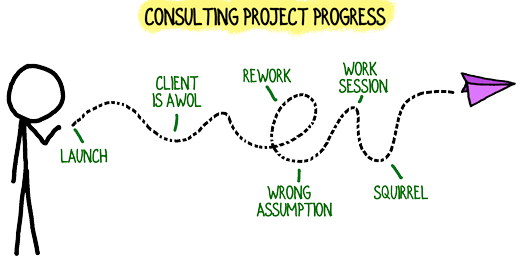
Consulting projects wander off the rails for all manner of reasons.
Perhaps your characterization of your clients’ failings was overly blunt or public, a member of your team didn’t complete a crucial task at the promised time, a major deliverable contained a massive error, or you sent milk chocolate instead of dark chocolate to the project sponsor.
Mistakes happen. We’re all human.
Or perhaps it’s entirely your client’s fault that the project has encountered a flat tire.
It doesn’t really matter who’s to blame.
What matters is how you recover.
Eight best practices will help your consulting project and, more importantly, your consulting firm jump back on track to client delight.
How to Turn a Misstep Into Momentum
Respond Rapidly
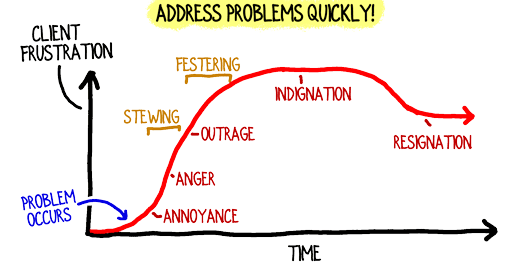
Don’t let a minor wobble turn into a full-blown breakdown.
When you find out the client is unhappy, address it immediately.
Never Become Defensive
Blame and shame serve little purpose in consulting.
Simply show that the problem can be rectified and won’t be repeated.
Years ago, a client of mine pointed out that I had missed a couple of milestones. I acknowledged the error and pledged more diligence in the future.
He subsequently awarded me multiple, six-figure projects.
Avoid Excuses
Be diligent about not making excuses.
This is harder than it sounds–we instinctively want to deflect any ill will directed our way.
One way to avoid making excuses is to ask for more information, then listen.
When you’re listening you can’t be defending yourself or making excuses.
Apologize
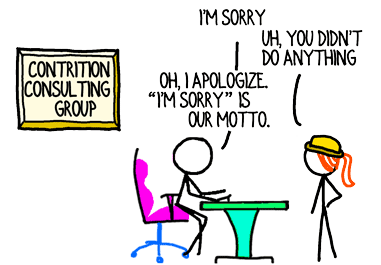
Whether it’s your “fault” or not, contrition creates goodwill.
Your genuine, heartfelt apology and admission of wrongdoing may not save the current project you’ve torpedoed; however, it will give you a great shot at another project with that same client in the future.
Collaborate on the Solution
Ask your client what would make them happy in light of the previous failure.
Left to our own devices, we often overcompensate and spin out, or develop solutions that aren’t ideal for our clients.
Your clients know what they want. Ask them!
Offer Amends
If you’ve caused harm, even inadvertently, offer some form of restitution.
The partners at a consulting firm we advise had a huge blow-up after one of our work sessions.
Everyone knew my team wasn’t at fault.
However, since our process may have brought the issues to a head, we offered extra one-on-one coaching with each partner at no cost.
For a small amount of effort, we upgraded the relationships to first class.
Anticipate Crises
Reconfigure the dashboard of your delivery approach to set off alarms—before problems reach your clients.
Also include plenty of feedback opportunities in your client experience process to surface client discontent at the earliest stages.
Create a Safe Space to Vent
Your clients should be able to gripe, grouse, and air grievances secure in the knowledge that your consulting firm handles negativity gracefully.
What’s your smoothest recovery from a project that hit a road closure? Share your consulting turbulence tips.

Text and images are © 2026 David A. Fields, all rights reserved.

Hi David – I appreciate you for illuminating this latent, hidden issue of missteps. No one is immune to this – yet few accept this even exists much like the Lochness Monster in England or the Yeti in the Himalayas 🙂 The social stigma is too much for most people.
In my experience, mis-steps, handled well, can become a tremendous credibility booster and a terrific way to deepen relationships. The perception of a “learning team” is much stronger than that of a “know-all team”.
Totally agree with you, Shankar. (Except maybe about the Loch Ness Monster.) We’ve all run into people who, having kicked an addiction like smoking, become evangelists for their new lifestyle. The same 180-degree turnabout can happen when you gracefully correct a misstep–your detractors become overt supporters of your firm.
I’m glad you added your perspective today, Shankar!
In NLP, we use a process called pacing and leading.
Pacing: I appreciate your concern/issue about X. We have the same concern.
Leading: We have a number of ways to resolve the issue. May I describe each and see which one would work best for you?
First align with your customer, then lead them out of the wilderness.
Nice, Jay! The combination of pacing and leading is very effective.
One minor tweak I’d throw in is giving your client an opportunity to state what they think would work before (best), during or after (worst) you present your options. Sometimes we don’t give our clients quite enough credit–they like to lead too, and they will be more bought into the path they’ve suggested themselves.
Excellent add-on to the article, Jay. I very much appreciate your sharing.
In every status meeting, we have an item where we ask about risks and responses. It’s amazing how valuable that is.
That’s an excellent practice, Daniel–very impressive. We typically set up a monthly sponsor meeting to surface concerns and trade thoughts on how to make the project run better. Your every-meeting approach is also very good.
A lot of readers will benefit from seeing what you do, Daniel–thanks for sharing!
Something I’ve done for years that works well is to make it clear from the very beginning that I only work on a “win-win or no deal” basis. In fact, it’s baked into the initial scoping meeting and subsequent contract that both the client and I take the responsibility to keep the engagement on a win-win status throughout. That means that we each have the responsibility to speak up if friction arises so that we can work cooperatively to bring it back in balance. This makes it very easy to address any issues that arise (and they will) with the client because they already agreed to work things out together.
Outstanding practice, Gabrielle. Establishing expectations–yours as well as the client’s–early on in an engagement or even before you sign an engagement can prevent heaps of trouble down the road.
I’m glad you shared what you do, Gabrielle and think many other readers will adopt your approach.
Gabrielle – this is a beautiful way to create a strong structure for direct and honest feedback. Do you actually have wording in your proposals that outline this after you talk it over?
Thanks Heidi – yes, keeping it open and honest, especially right from the start, makes all the difference! Yes, I use wording very similar to what I wrote about in my agreements and verbally go through it with clients when setting up the agreement to get their buy-in (and commitment) to the idea.
Great example, Gabrielle–thank you for following up on Heidi’s question!
I’m dealing with a slightly different flavor of turbulence. We wrapped up a project a couple of months ago, and the original client team was very positive. They renewed multiple times and expanded scope and also had detailed plans to involve us in other projects.
But since then, the client team has changed. One new stakeholder doesn’t view the work as positively has shared negative and vague feedback.
I’ve reached out to understand this person’s concerns and offered to bring the team back to help resolve any issues at no cost.
Curious how you’d handle a situation where the “problem” surfaces long after the project is over, and possibly because new people are judging work they weren’t part of or because the recommendations made are not favorable for that person’s position within the company.
Very interesting and understandably frustrating situation, Steven. You’ve absolutely done the right thing in seeking to understand the new person’s concerns. I’m not sure I would have offered to rectify issues at no cost if the project was deemed successful before; however, that’s a strategic decision and depends on the specifics that you know much better.
In general, your approach is sound: the message to a new person who raises concerns on an old project is, “I totally get what you’re saying. While we did a great job of hitting your predecessor’s goals, your outlook and your goals are slightly different, which warrants a shift in our work.” Then it’s up for discussion whether that shift in your work is a paid, follow-on project or whether it’s free rework.
Let me know your thoughts, Steven. Others may weigh in on this situation too. It’s a good question for our Monday Q&As too–thanks for raising it. (And sorry you’re facing the conundrum.)