
 David A. Fields Consulting Group
 Writing (and publishing) a book can confer myriad benefits on your consulting firm.
More publicity, more inquiries from clients, more projects, higher fees.
Producing a great book multiplies those benefits and can lift you and your consulting firm to the next level of success.
But how do you write a great business book?
Most business books are like grocery-store cookies: reasonably satisfying, though too much filler. You wouldn’t recommend them to a friend.
A few business books are bad or beyond their expiration date.
A few are quite tasty—you’ll recommend those on occasion.
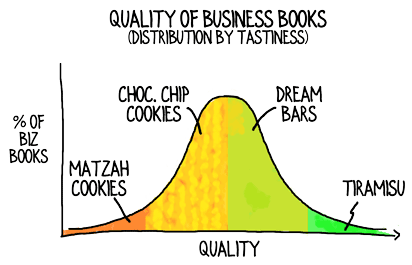
A very tiny fraction of business books reach the tiramisu tier—sublime to consume and (intellectually) fattening. They’re highlighted, filled with notes, dog-eared and frequently recommended.
Your consulting business won’t notice a difference between an okay book and a good book.
However, publishing a great book raises your consulting firm above the churning froth of experts in your field.
It will be passed around and recommended extensively.
Your firm will receive more invitations to speak, more inquiries about projects, and more consulting engagements at higher fees.
Writing a great book is difficult and takes effort.
And, it’s 100%, totally worth the investment.
One tip that will help you craft your masterpiece:
Skillfully leverage beta-readers
It almost goes without saying that if you’re publishing a book, you need to run it by a few rounds of beta-readers.
A review from Claude, ChatGPT or Gemini is no substitute for actual feedback from readers in your target audience!
Most authors don’t make the best use of the beta-reader stage of the process; however, you will if you follow the best practices below:
Skillfully Leveraging Beta-Readers
Avoid Dullness!
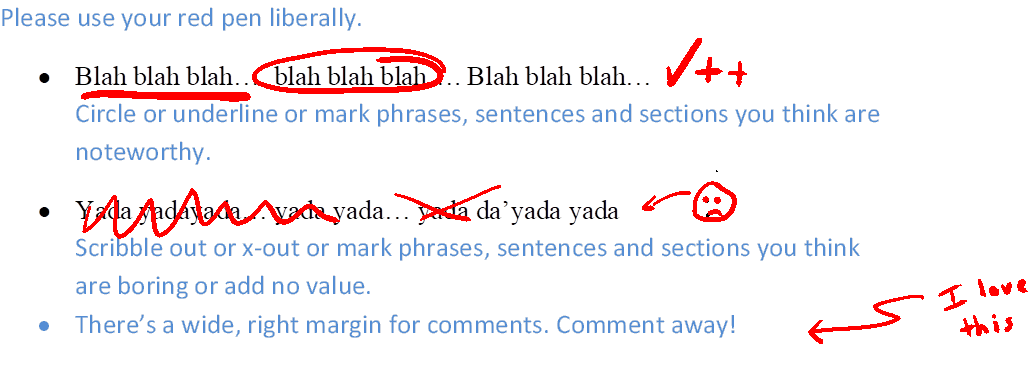
Include a scale like the one shown below at regular intervals to get a bead on when your book is becoming boring.
Why? Because a great book holds its reader’s attention from start to finish, whereas a single, ho-hum portion can instantly demote your work from the ranks of outstanding books.

Invite a Lot of Heckling
You’re not looking for kudos at this stage.
You want tough-to-hear reactions that point the way to a better book.
Consider providing a detailed set of directions to your readers, such as the set shown below:
Enroll Your Most Aspirational Target
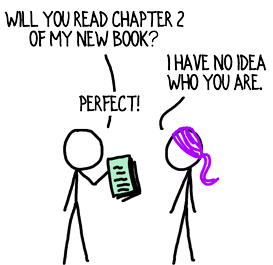
Assemble a list of beta-readers who look just like your prospective clients.
Beta readers should not be your friends, family or other consultants.
Solicit a TON of Feedback
Never settle for input from fewer than two beta readers per chapter. Three per chapter would be even better.
You’ll find widely divergent opinions on some of your materials.
(I had as many as eight beta-readers review some chapters of The Irresistible Consultant’s Guide to Winning Clients.)
Make it Easy
Either mail hard copy drafts along with a red pen and a pre-paid return envelope, or send a PDF document with clear instructions on how to add comments.
Even though a printed document may strike you as incredibly old-fashioned, it’s actually still the easiest format for people to scribble free-form comments on long-form prose.
Skillfully leveraging beta readers is one of many tips that will help advance the fortunes of your consulting firm via a truly great book.
Based on your writing, publishing and reading experience, what else should a consultant do to write a great book?
Text and images are © 2026 David A. Fields, all rights reserved.

With my book, The Patient Recruitment Conundrum, I gathered feedback from the various stakeholders in the ecosystem I was writing about – which helped enhance and clarify the relevant information about their issues.
Excellent case study, Ross. Congratulations on the book!
How do we get beta readers? It might be awkward to bother clients, who are busy. Do we offer them a free copy of the final book? Do we just ask them to review one chapter only?
Your Network Core is a great source of beta readers. That will include your clients and also prospects. And yes, if I didn’t mention it above, then I meant to: you send 1-2 chapters to each beta reader.
Great question, Praveen!
I invested the last two years writing “Fixing Healthcare: How Executives Can Save Their People, Their Business, and the Economy”.
Beta-readers definitely made the book better, and they’ve helped promote it ever since its release in November, 2025.
Good article.
Congratulations on the book, Donovan. And you’ve surfaced an important side benefit of beta-readers: they’re invested in the book’s success.
Thank you for sharing your experience!
Great tips as always. Any thoughts on coming up with book/chapter topics, length and formats?
Smart questions, Teren. The topics should be dictated either by: 1) your readers’ questions, or 2) the natural breakdown of the framework/model you’re presenting. Length should be as short as possible while preserving the information readers need to know. There’s really no such thing as a business book that’s too short, but there are plenty of books of every length that say virtually nothing. Edit mercilessly. I’ve cut out entire chapters of my books!
Thanks for jumping into the conversation!
I recently suggested this to an author client of mine who is self-publishing. The feedback she’s gotten has helped her make her book so much better. While she had great content, it wasn’t presented in the best way for readers. Yet, she’d gotten a number of glowing endorsements on the original manuscript. Why? So many endorsers don’t read the entire book, they want to be nice, and they want to be featured. Beta readers are so important to the writing process, especially for anyone self-publishing who won’t have the benefit of a publishing house’s editing staff.
Well said, Tina. You have more experience and perspective than most folks on this, so your input is very valuable. You’re so right that we need to have our beta readers be honest, not polite. Both of my (published) books went through publishers and had editors, yet I didn’t find the editorial staff to be particularly good at ensuring the manuscript was absolutely top-class. They’re more interested in getting an acceptable book out the door on time.
Thank you for adding your two cents, Tina!
great point. the publishing staff doesn’t have the field experience or knowledge of your topic but they can help with the organization and delivery of material which is where I see a lot of self-publishing authors struggle.
Absolutely right, Tina. A good developmental editor can really help with the overall flow. They can help you get your book to a solid B or B+. They won’t get you to an A+ tiramisu book.