
 David A. Fields Consulting Group
 The Fastest Way for Your Consulting Firm to Build Trust with New Prospects
Precisely 297 words from now, I’m going to reveal a technique for massively increasing the likelihood that your consulting firm converts opportunities into consulting engagements.
You already know that clients choose the consulting firm they trust most.
Just like you already know that you’re not going to win Squid Game, and if you let AI name your music categories, you’ll end up with, “Slightly Offensive Smooth Jazz for Dining.”
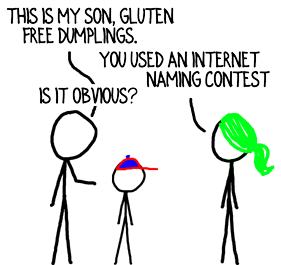
A True Story About Trust
Years ago, the VP of a credit union reached out to me to discuss a consulting opportunity. He had already established his budget and talked with numerous consulting firms.
My firm was a last-minute entry into the fray based on an offhand recommendation from a mutual acquaintance.
Three days after the initial call, we won the project for 55% higher fees than the VP had budgeted!
How?
Trust.
Enormous trust established very quickly.
How do you build trust with a prospective client—particularly one with whom you have little or no history?
And how do you accomplish that goal pronto?
Sure, your case studies, thought leadership, sensible process, and testimonials help.
And if your prospect’s friend touts you in glowing terms, you have a huge head start.
But all of those trust builders suffer from a common deficit:
They lack the undeniable weight of the prospect’s own, firsthand, personal experience.
That’s why your consulting firm’s easiest path to more revenue is follow-on business, where the decision-makers already trust you based on their own interaction with you on prior projects.
The fastest way to boost trust is to give your prospects their own taste of your trustworthiness.
Since new prospects can’t evaluate you based on past projects, they gauge your trustworthiness from the experiences they do have.
That’s where this oft-overlooked technique comes in:
Small Promises
Deliberately make—then keep—small promises to your prospect.
In other words, go out of your way to create opportunities that demonstrate your consulting firm lives up to its commitments.
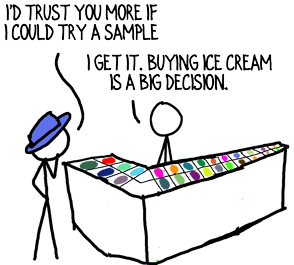
In all likelihood, you’re inadvertently skipping many trust-building opportunities in every interaction with your prospects.
Examples of Small Promises
When your prospect raises an issue, tell him you’d like to finish your current line of thought before addressing his concern.
A few minutes later, circle back and address the issue.
These are called “loopbacks” and even though they seem very simple, they are enormous trust-builders.
Come up with some reason to send a specific piece of information by close of business…
…then send the promised information.
Indicate that you’ll follow up with an email or text the next day.
Follow up with an email or text the next day. (Obvious, but you’d be surprised at how many consulting firms fail this simple trust test.)
Promise an introduction to someone specific.
Broker that introduction within hours.
Note at the start of a meeting that you’ll only take a certain amount of time.
Make a point of concluding the discussion punctually.
At least once during the discussion, honestly admit that you don’t know the answer to a question or that you don’t have the expertise.
Professing ignorance implicitly makes—and immediately fulfills—the promise that you won’t exaggerate your skills and capabilities.
That’s just a handful of small promises you can purposely initiate.
What are your other ideas for building small promises into prospect discussions to quickly build trust?

Text and images are © 2026 David A. Fields, all rights reserved.

Like your example, I was given the opportunity to meet with the two owners of an IT firm to discuss delivering a one-day training workshop. I was the last person they were meeting that day. I listened and made the discussion all about them. At the end of the meeting, they asked me to provide more information as I had made it to the final round. I told them that I would not do that. In my opinion, what they were asking me to deliver would be treating a symptom rather than the underlying problem. Paying me to deliver the workshop they thought they needed would be a waste of their money and would not deliver the results they wanted.
This action created a huge amount of trust and I ended up working with the owners for over two years.
Another trust builder: be on time.
Wow, Michael, that’s an amazing example of building trust and also of being Right-Side Up. You made sure the meeting (and the results) were about THEM, not about your immediate revenue. Very impressive.
Thank you for sharing that case study, Michael!
Always, always, always be on time. Also: always be on time.
Good one, Martin. Punctuality is definitely a proof point on trustworthiness. If a prospect can’t trust you to be on time, how can they trust you to deliver results reliably?
Excellent addition to the list!
This great! One thing I know for sure is that being targeted in your networking as well as intentional is important! I like to observe and let potential clients do the majority of the talking, responding after I hear the gap (concern) that they have.
Well said, Shantana. You’re able to demonstrate trustworthiness more reliably when you’re selective about who you interact with and when you’re Right-Side Up during your conversations.
I appreciate your jumping into today’s conversation, Shantana!
The odds seem different for this side of the world (Africa) where decisions are solely based on price. Just wondering how to shift the client from price discussion first to a value discussion. Nevertheless, I have seen international clients largely going for trust above everything else. Thanks David
Great question, Ernest. Decisions aren’t made solely on price anywhere. At the very least, there’s a basic qualification required or an assumption that the accepted, lowest priced vendor has the ability to fulfil the Desired Outcome. (Either that, or there’s no real allegiance to the Desired Outcome, which is rare.)
No one would let me build their skyscraper, even if I said I’d do it for free, because I know absolutely nothing about architecture or construction, and the risk and cost of failure are too high.
And that highlights the central point of all consulting, all contracting, all pricing and how value comes in: Risk. Everything we do with clients is an exercise in risk management. What risk (sometimes manifested as worry or fear) is driving the desire to take the lowest price? When you understand that and you understand the other risks your clients are striving to mitigate, you understand where value is assigned.
This is a deep topic which can’t be fully explored in this setting. The short answer is that in discussion with your prospect, you relate the story of the two auto repair shops on the same street. One had a large sign offering “Brake Service, $99” and the other had a sign saying, “Brake Service, $299. Collision repairs from $99 Brake Jobs: $2,999.” Does your prospect really want a $99 brake job?
Thanks David for the sky scrapper analogy. It is spot on indeed. I think i mearnt largely instead of solely. I agree with you, this is broader topic.
It’s easy for all of us to think we’re losing on price. We’re not. Every project is won or lost based on an assessment of value–which is really an assessment of risk management.
I appreciate your thoughtful question, Ernest.